
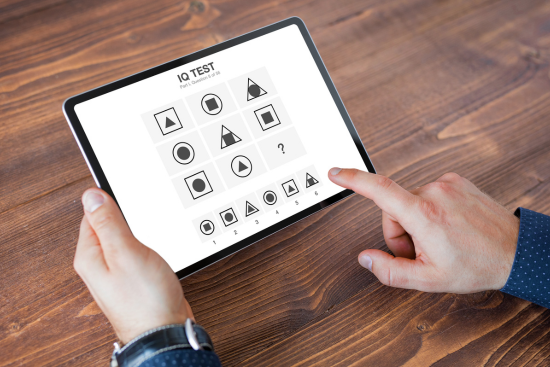
IQ tests, or Intelligence Quotient tests, are designed to measure human intelligence. These tests have been used for over a century to assess cognitive abilities and potential. In this comprehensive guide, we will explore the history, types, purposes, and controversies surrounding IQ tests, providing a thorough understanding of their role in educational and psychological assessments.
The History of IQ Tests
The concept of measuring intelligence dates back to the early 20th century. The first modern IQ test was developed by Alfred Binet and Théodore Simon in 1905. The Binet-Simon Scale aimed to identify children who needed special educational support. Over time, IQ tests have evolved, incorporating various theories of intelligence and psychometric principles.
Types of IQ Tests
- Stanford-Binet Intelligence Scales: An adaptation of the original Binet-Simon Scale, the Stanford-Binet test assesses five factors of cognitive ability: fluid reasoning, knowledge, quantitative reasoning, visual-spatial processing, and working memory.
- Wechsler Adult Intelligence Scale (WAIS): Designed for adults, the WAIS evaluates cognitive ability across four domains: verbal comprehension, perceptual reasoning, working memory, and processing speed. There are also versions for children (WISC) and preschoolers (WPPSI).
- Raven’s Progressive Matrices: This nonverbal IQ test measures abstract reasoning and is often used in diverse cultural contexts. It involves identifying patterns and completing visual puzzles.
- Cattell Culture Fair Intelligence Test: Aimed at minimizing cultural and language biases, this test evaluates fluid intelligence through nonverbal tasks, such as series completion and classification.
- Woodcock-Johnson Tests of Cognitive Abilities: This comprehensive battery assesses general intellectual ability, specific cognitive abilities, and academic achievement, making it useful for educational planning.
Purposes of IQ Tests
- Educational Placement: IQ tests are often used to determine appropriate educational placements for students, including identifying those who need special education services or gifted programs.
- Clinical Assessment: Psychologists use IQ tests to diagnose intellectual disabilities, learning disabilities, and other cognitive disorders. These tests help in developing individualized treatment and intervention plans.
- Research: IQ tests are valuable tools in psychological and educational research, helping scientists study the nature of intelligence, its development, and its relationship with other variables such as socioeconomic status and academic achievement.
- Career and Employment: Some employers use IQ tests as part of their hiring process to assess candidates’ problem-solving abilities, learning potential, and adaptability.
Understanding IQ Scores
IQ scores are typically standardized, with a mean score of 100 and a standard deviation of 15. This means that the majority of people score between 85 and 115. Here’s a breakdown of what different IQ scores generally indicate:
- Below 70: Intellectual disability
- 70-85: Below average intelligence
- 85-115: Average intelligence
- 115-130: Above average intelligence
- 130 and above: Giftedness
Theories of Intelligence
IQ tests are based on various theories of intelligence. Some of the most influential theories include:
- Spearman’s G Factor: Charles Spearman proposed that a general intelligence factor, known as “g,” underlies all cognitive abilities. IQ tests often aim to measure this general cognitive ability.
- Gardner’s Multiple Intelligences: Howard Gardner argued that intelligence is not a single entity but comprises multiple intelligences, including linguistic, logical-mathematical, musical, spatial, bodily-kinesthetic, interpersonal, intrapersonal, and naturalistic intelligences.
- Sternberg’s Triarchic Theory: Robert Sternberg’s theory divides intelligence into three components: analytical (problem-solving), creative (innovation), and practical (everyday tasks).
- Cattell-Horn-Carroll (CHC) Theory: This comprehensive model integrates several theories and identifies broad and narrow cognitive abilities, including fluid intelligence, crystallized intelligence, and processing speed.
Controversies and Criticisms of IQ Tests
Despite their widespread use, IQ tests have faced significant criticisms and controversies:
- Cultural Bias: Critics argue that many IQ tests are biased toward Western, middle-class populations, disadvantaging individuals from different cultural or socioeconomic backgrounds.
- Narrow Definition of Intelligence: Some believe that IQ tests focus too narrowly on specific cognitive skills and fail to capture the full spectrum of human intelligence, such as emotional or social intelligence.
- Predictive Validity: While IQ scores can predict academic and professional success to some extent, they do not account for other important factors like motivation, creativity, and personality traits.
- Ethical Concerns: The use of IQ tests in educational and employment settings raises ethical issues, including potential discrimination and the stigmatization of individuals based on their scores.
Tips for Taking an IQ Test
If you are preparing to take an IQ test, here are some tips to help you perform your best:
- Get Adequate Rest: Ensure you are well-rested before taking the test, as fatigue can significantly affect your cognitive performance.
- Practice Relaxation Techniques: Anxiety can impair your test performance. Practice deep breathing, meditation, or other relaxation techniques to stay calm.
- Familiarize Yourself with Test Formats: Taking practice tests can help you become familiar with the types of questions and format of the IQ test you will be taking.
- Eat a Balanced Meal: Proper nutrition can affect cognitive function. Eat a balanced meal before the test to maintain your energy levels and concentration.
- Manage Your Time: Pay attention to the time limits for each section of the test and pace yourself to ensure you can complete all the questions.
Conclusion
IQ tests are valuable tools for measuring cognitive abilities and potential. They have a long history and are used for various purposes, including educational placement, clinical assessment, research, and employment. Understanding the types, purposes, and controversies surrounding IQ tests can help you make informed decisions about their use and interpretation. Whether you are taking an IQ test for educational, clinical, or personal reasons, being prepared and knowledgeable about the process can help you achieve the best possible outcome.