
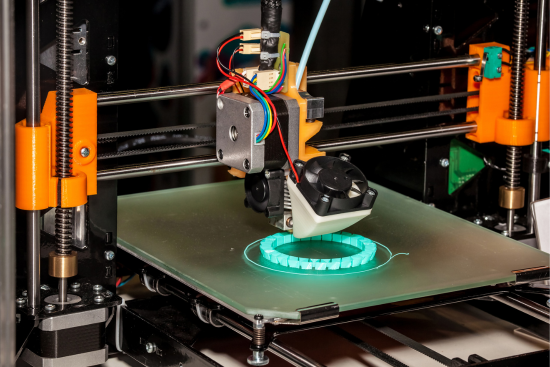
In recent years, 3D printers have revolutionized various industries, from manufacturing and healthcare to education and entertainment. These devices, which create three-dimensional objects by layering materials based on digital models, offer endless possibilities for innovation and creativity. This article delves into the intricacies of 3D printers, their applications, and their impact on various sectors, providing a comprehensive guide for anyone interested in this transformative technology.
Understanding 3D Printers
3D printers, also known as additive manufacturing machines, work by depositing materials layer by layer to build an object from a digital file. This process contrasts with traditional subtractive manufacturing methods, where material is removed to shape an object. The primary components of 3D printers include a print bed, an extruder or print head, and a control system to manage the printing process.
Types of 3D Printers
Several types of 3D printers cater to different needs and materials:
- Fused Deposition Modeling (FDM): FDM 3D printers are the most common and affordable type. They use thermoplastic filaments, melted and extruded through a nozzle to build objects layer by layer. Ideal for beginners and hobbyists, FDM printers are widely used in prototyping and educational settings.
- Stereolithography (SLA): SLA 3D printers use a laser to cure liquid resin into solid layers. Known for high precision and smooth finishes, SLA printers are popular in industries requiring detailed and accurate models, such as jewelry and dental applications.
- Selective Laser Sintering (SLS): SLS 3D printers use a laser to sinter powdered materials, typically nylon or other polymers, into solid structures. These printers are well-suited for creating durable, functional parts and are commonly used in aerospace and automotive industries.
- Digital Light Processing (DLP): Similar to SLA, DLP 3D printers use a digital light projector to cure resin. They are known for their speed and high-resolution output, making them ideal for producing small, detailed objects.
- Metal 3D Printers: Utilizing various technologies such as Direct Metal Laser Sintering (DMLS) and Electron Beam Melting (EBM), metal 3D printers create parts from metal powders. These printers are essential in industries requiring strong, heat-resistant components, like aerospace and medical implants.
Applications of 3D Printers
The versatility of 3D printers has led to their adoption across numerous fields:
- Manufacturing: 3D printers streamline prototyping, allowing manufacturers to quickly create and test product designs. This reduces time-to-market and lowers production costs. Additionally, 3D printing enables on-demand production of spare parts, reducing inventory needs.
- Healthcare: In the medical field, 3D printers create customized prosthetics, dental implants, and surgical models. Bioprinting, a cutting-edge application, uses 3D printers to fabricate tissue structures and, potentially, entire organs for transplantation.
- Education: 3D printers enhance STEM education by providing hands-on learning experiences. Students can design and print models, fostering creativity and practical understanding of engineering and design principles.
- Architecture: Architects use 3D printers to produce detailed scale models of buildings and structures. This aids in visualizing and refining designs before construction, improving communication with clients and stakeholders.
- Fashion and Art: Designers and artists leverage 3D printing to create intricate jewelry, clothing, and sculptures. This technology allows for innovative designs that are difficult or impossible to achieve with traditional methods.
- Entertainment: In the film and gaming industries, 3D printers produce props, costumes, and character models. This speeds up production timelines and enables the creation of highly detailed, customizable items.
Advantages of 3D Printers
3D printers offer numerous benefits, including:
- Customization: 3D printing allows for the creation of highly customized products tailored to individual needs and preferences, from personalized medical implants to bespoke fashion items.
- Cost-Effectiveness: By reducing material waste and enabling rapid prototyping, 3D printing lowers production costs and minimizes the need for large inventories.
- Speed: 3D printers accelerate the design-to-production process, allowing for faster iteration and development of products.
- Complexity: These printers can produce complex geometries and intricate designs that are difficult or impossible to achieve with traditional manufacturing methods.
- Sustainability: 3D printing can be more environmentally friendly by using only the necessary amount of material and enabling the recycling of printed parts.
Challenges and Limitations
Despite their advantages, 3D printers face several challenges:
- Material Limitations: The range of materials suitable for 3D printing is expanding but remains limited compared to traditional manufacturing. Some materials may lack the strength or durability required for specific applications.
- Print Quality: The quality of 3D-printed objects can vary, with issues such as layer lines, warping, and weak interlayer bonding affecting the final product.
- Speed and Scale: While 3D printers excel in producing small, detailed items, printing larger objects can be time-consuming. Scaling up production for mass manufacturing remains a challenge.
- Cost: High-end 3D printers and materials can be expensive, potentially limiting accessibility for some users and applications.
Future Trends in 3D Printing
The future of 3D printing holds exciting possibilities:
- Material Innovation: Advances in material science will expand the range of printable materials, including composites, ceramics, and bio-compatible substances, enhancing the functionality and application of 3D printers.
- Multi-Material Printing: Future 3D printers will be capable of printing with multiple materials simultaneously, enabling the creation of more complex and functional objects.
- Speed and Efficiency: Ongoing research aims to increase printing speeds and improve efficiency, making 3D printers more viable for mass production.
- Accessibility: As technology advances and costs decrease, 3D printers will become more accessible to consumers and small businesses, driving widespread adoption.
- Integration with AI and Robotics: Combining 3D printing with artificial intelligence and robotics will lead to smarter, autonomous manufacturing systems capable of self-optimization and adaptation.
Conclusion
In conclusion, 3D printers are transforming how we design, create, and manufacture objects across various industries. From healthcare and education to fashion and entertainment, the applications of 3D printing are vast and continually expanding. By understanding the different types of 3D printers, their benefits, and their challenges, we can better appreciate their potential to revolutionize our world. As technology evolves, the future of 3D printing promises even greater innovations, paving the way for new possibilities in creativity and production.