
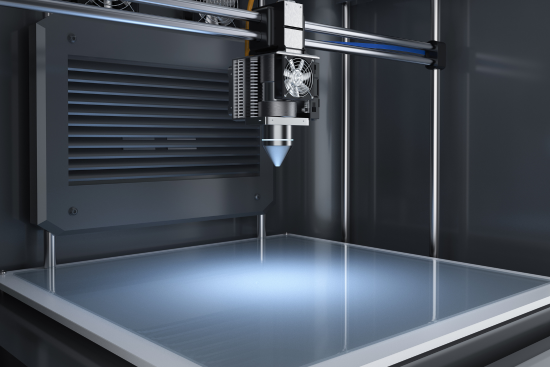
3D printers have transformed the way we create and manufacture objects, enabling everything from rapid prototyping to custom-made products. As technology advances, 3D printers are becoming more accessible and versatile, impacting industries such as healthcare, aerospace, education, and beyond. This article delves into the intricacies of 3D printers, exploring their types, applications, and the future of additive manufacturing.
Understanding 3D Printing Technology
3D printing, also known as additive manufacturing, involves creating three-dimensional objects by adding material layer by layer based on a digital model. 3D printers read digital files and deposit materials such as plastics, metals, or ceramics to build objects from the ground up. This contrasts with traditional subtractive manufacturing methods, which remove material to achieve the desired shape.
Types of 3D Printers
There are several types of 3D printers, each utilizing different technologies and materials to achieve specific results:
- Fused Deposition Modeling (FDM): One of the most common and affordable types, FDM 3D printers extrude melted thermoplastic filaments through a nozzle to build objects layer by layer. These printers are ideal for beginners and hobbyists due to their ease of use and versatility.
- Stereolithography (SLA): SLA 3D printers use a laser to cure liquid resin into solid layers, creating highly detailed and smooth-finished objects. This technology is popular in industries requiring precision, such as dental and jewelry manufacturing.
- Selective Laser Sintering (SLS): SLS 3D printers use a laser to fuse powdered materials, typically nylon or polyamide, layer by layer. This technology produces durable and functional prototypes, making it suitable for engineering and aerospace applications.
- Digital Light Processing (DLP): Similar to SLA, DLP 3D printers use a digital light projector to cure resin. DLP printers are known for their speed and ability to produce fine details, making them ideal for creating intricate designs and models.
- Metal 3D Printing: Metal 3D printers, such as Direct Metal Laser Sintering (DMLS) and Electron Beam Melting (EBM), use lasers or electron beams to fuse metal powders. These printers are used in industries requiring high-strength and heat-resistant components, such as aerospace and automotive manufacturing.
Applications of 3D Printers
The versatility of 3D printers extends across various fields, driving innovation and efficiency:
- Prototyping and Product Development: 3D printers allow designers and engineers to quickly create prototypes, test designs, and make iterative improvements, reducing time-to-market and development costs.
- Healthcare: In the medical field, 3D printers are used to produce custom prosthetics, implants, and surgical instruments. Bioprinting, a specialized form of 3D printing, enables the creation of tissue and organ models for research and transplantation.
- Education: 3D printers are becoming essential tools in education, enabling students to turn theoretical concepts into tangible objects. This hands-on learning approach enhances creativity and problem-solving skills.
- Aerospace and Automotive: The aerospace and automotive industries leverage 3D printing for producing lightweight, complex parts that are difficult or impossible to manufacture using traditional methods. This leads to improved fuel efficiency and performance.
- Fashion and Art: Artists and designers use 3D printers to create unique jewelry, clothing, and sculptures, pushing the boundaries of creativity and customization.
- Construction: Large-scale 3D printers are used in construction to print building components, and even entire houses, with precision and speed, potentially reducing labor costs and construction waste.
Advantages and Challenges of 3D Printers
3D printers offer numerous benefits but also come with certain challenges:
Advantages:
- Customization: 3D printers enable the production of customized products tailored to individual needs and preferences, from medical implants to fashion accessories.
- Reduced Waste: Additive manufacturing generates less material waste compared to subtractive methods, making it more environmentally friendly.
- Complex Geometries: 3D printers can produce intricate and complex geometries that are difficult or impossible to achieve with traditional manufacturing techniques.
- Rapid Prototyping: The ability to quickly produce prototypes accelerates the design and testing process, reducing development time and costs.